
POLAROID
From Shot to Canvas: The Photographic Object as Pictorial Matter
Artists: Alberto D'Amico, Alessandra Tantillo
Artistic Supervision: Matteo Di Castro
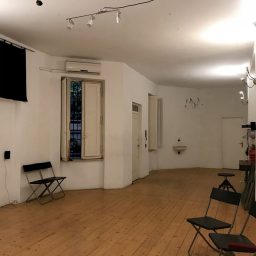
Venue: Studio Campo Boario, Rome
EXHIBITION CONCEPT
"The Polaroid is no longer the window through which we look at the world, but the world itself asking to be painted."
Following the visual dialogue and synergy explored in their previous exhibition Ob-La-Di, Ob-La-Da, Alberto D’Amico and Alessandra Tantillo return to share the space of Studio Campo Boario to shape a new chapter in their pictorial research. At the heart of this second collaboration — realized under the artistic supervision of Matteo Di Castro — lies a shared and long-standing iconographic obsession: the instant Polaroid photograph.
The project arises from a sharp conceptual and methodological short-circuit that overturns the age-old relationship between painting and photography. While the brush has traditionally drawn upon the snapshot as a reference, trace, or mere tool for recording reality, in Polaroid this hierarchy is inverted: photography ceases to be the medium and becomes itself the sole subject and object of investigation on the canvas.
Alberto D’Amico and Alessandra Tantillo do not paint what lies inside the shot — the portraits, daily fragments, or details of lived experience — but choose instead to paint the Polaroid as a visual fetish. Emerging on the canvas are the unmistakable disproportionate white border, the geometries of the iconic format, the chemical patina, the color shifts, and the imperfections characteristic of instant film. The photographic image loses its original function as an archival document or nostalgic keepsake to become pure pictorial matrix.
Invoking the Polaroid inevitably recalls the imagery of Andy Warhol, who made this tool his visual notebook and the emblem of an immediate, serial aesthetic. D’Amico and Tantillo embrace this Pop Art legacy — evident in the graphic impact of the frame and bold chromatic tones — yet look beyond its glossy surface through slowness and tactile materiality. Translating the speed of instant chemistry into the slow sedimentation of oil or acrylic pigment means restoring weight, body, and temporal permanence to an image conceived to be fleeting.
Continuing the harmony established in Ob-La-Di, Ob-La-Da, the two artists engage in a dual solo exhibition that transforms Studio Campo Boario into a workshop of visual correspondences — where their obsession with the Polaroid format becomes the ideal vehicle to question the boundaries, memory, and very matter of contemporary painting.
Post
Story
Whatsapp