
"Mother Nature" event/conversation in collaboration with Anthony Lombardi and Giovanni Lauricella.
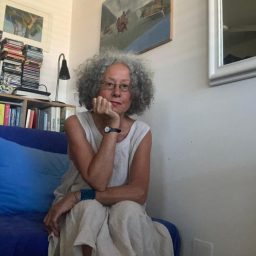
My open studio also houses some works from my school.
"The soul is not 'inside' us; it is we who, walking in nature or through city streets, walk among the soul. We do not have a soul, it is the soul that has us. The unconscious is not inside the head, but outside, in the world. We are within the psyche, not the psyche within us."
James Hillman, The Soul of the World and the Thought of the Heart.
I draw on Hillman's thought to explore a theme that has long been dear to me: the implications between nature and painting, a theme that runs through my work and my teaching.
Hillman attacks the tendency of modern psychology to "internalize" the soul, locking it away within the skull or within the ego of the individual.
The soul is an objective property of the world itself; it inhabits not only rivers and trees, according to the Romantic vision, but also roads and human-made objects.
In this context, nature is not a bucolic panorama to be reproduced, much less an inert backdrop, but the sensitive manifestation of the soul itself. Nature does not "suffer" our sight; it actively makes itself perceptible.
The "ecological problem" itself is not merely ethical, political, and technical: it is our inability to see, which makes us consider nature a "dead resource" to be exploited. Looking at a tree, an animal, or even a stone and realizing that they possess a face, an expressiveness, and a psychic dignity of their own that questions us, could be a concrete solution.
The Metaphor of the Garden.
For my painting, the Garden is not simply a quotation, from Paradise or the soul, but rather a figure of my entry into that special place that is Painting.
Here, forms exist, thanks to light, through the relationships that connect them. Composition makes the invisible web of these relationships visible, defining the elements as necessary to one another.
Relationship is the foundation of form, and the Garden, like painting, is that organized form in which nothing is completely isolated.
Here, unity is not given as uniformity, but as a relationship between differences, and my work in this Garden consists precisely in leading this unity, already existing in nature, to a new unity.
The Garden is the painting I have chosen as the instrument through which the concrete world can reveal its origins to me.
My work within it, which was entrusted to me I know not how, when, or why, certainly consists in reproducing, not nature directly, but its system based on relationships, giving rise to a "parallel harmony."
I strive to be a good gardener: I observe, measure, connect, sink, or let emerge.
I certainly don't create form from nothing; I simply accept the conditions under which form can manifest, because my goal is not to add form to the world, but to make visible the web of relationships through which the world takes shape.
Post
Story
Whatsapp