
n 1881, The Story of a Puppet was first published in serial form and later became known simply as Pinocchio. Its author, Carlo Collodi, was born on 24 November 1826, exactly two hundred years ago. Before becoming the father of the most famous piece of wood in literature, he was many other things: a pedagogue, journalist, translator, and a man who wrote books to help children understand the world when that world was still a work in progress. Italy itself was being born at the time.
The Schools of Arts and Crafts of Rome, officially founded in 1871, are only ten years older than Pinocchio, yet they belong to the same cultural season as Collodi. It was a time when Italy was a young and fragile country, where illiteracy was widespread, while workshops had long been the real schools: places where artisans and masters taught people to read the world through making. Learning an artistic or craft profession could offer even the humblest person an opportunity for social advancement.
Pinocchio is a universal archetype. Its story is the most translated in the world after the Bible. It crosses all boundaries and stands as a masterpiece of industrial-age mythopoetics that Italy has given to the world.
The protagonist experiences disobedience, hunger, school, the street, the fear of not being enough, and the desire to become someone. He is a son who saves his father. It is an intergenerational story.
Pinocchio is a piece of wood that wants to become human. It is the story of a modern metamorphosis. In Pinocchio's desire lies the story of every student who learns to sew, carve, model, draw, and see.
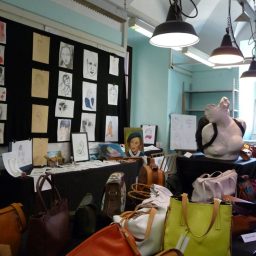
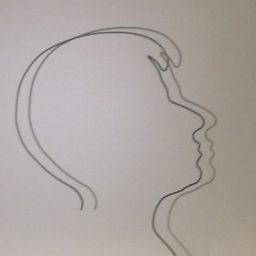
For a year, our students, guided by teachers from different disciplines, reflected on Collodi and Pinocchio. The works presented in this exhibition are the collective result of their collaboration. Pinocchio became both a travelling companion and an opportunity to reflect on Collodi and on our Schools. Whether approached with a smile or through a deeper immersion into the symbolic world of the narrative, these works are not merely a tribute to the puppet. They look back to a time when skilled making was considered the first form of freedom.
To continue building, with our hands and our minds, our future as well
(by Penelope Filacchione)





Post
Story
Whatsapp