
How can we look at the work of a neurodivergent artist without falling into clichés or paternalism?
You might say that, since there are as many shades of neurodivergence as there are differences among human beings, looking at the work of a neurodivergent artist is ultimately no different from looking at the work of any other artist. That is both true and not true.
The difference lies in the relationship that is created, in the way his gesture compels us to reconsider our perceptual categories.
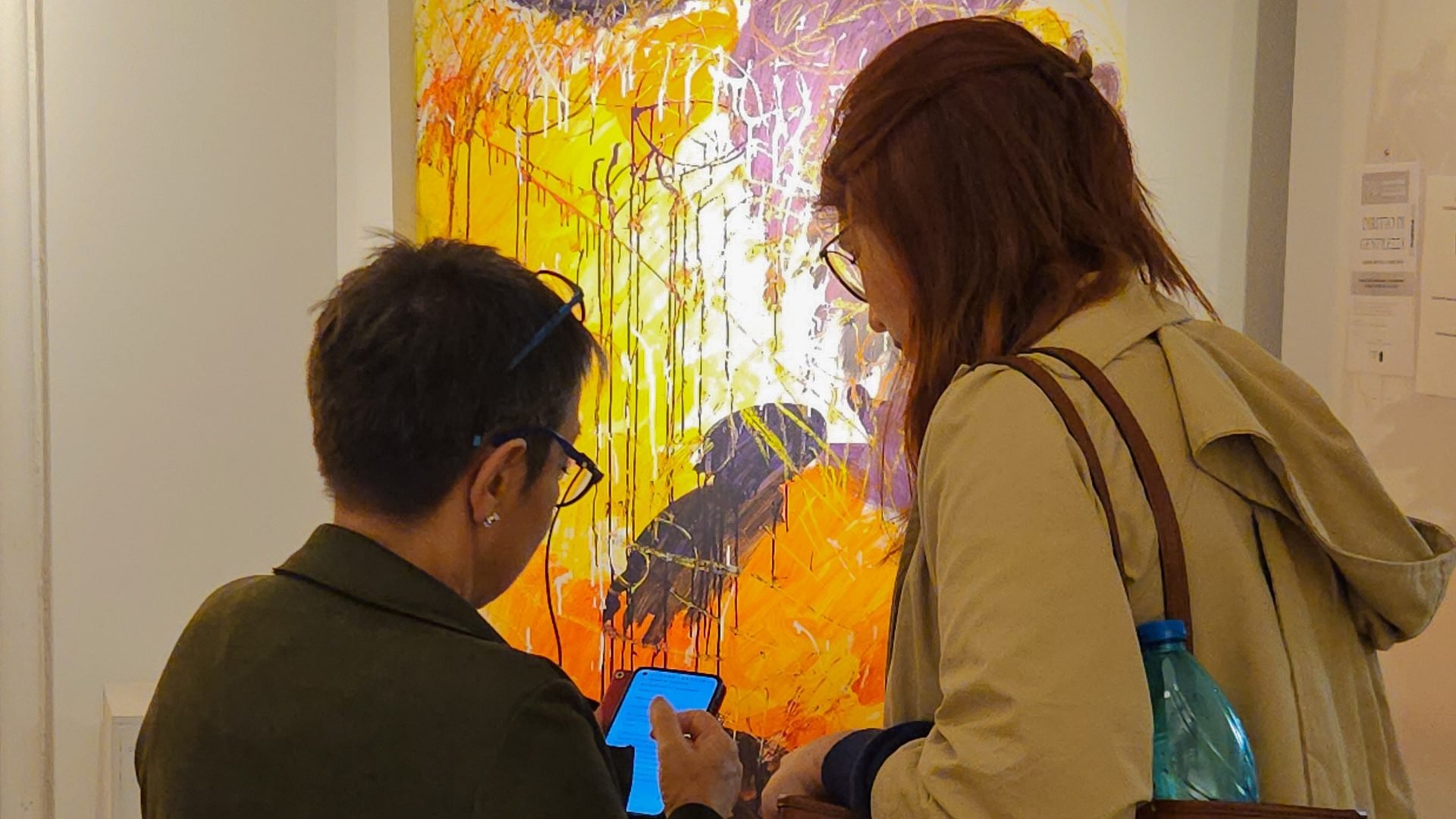
Tommaso Panichi leaves you no escape routes. He is so sincere, so direct in narrating his way of being in the world through brushes and colours, that there are no intellectual structures behind which to hide. What emerges is a person in his entirety, surprising us with the communicative power of his work, his gesture, his colour, his mark-making. There are also the titles (how can one not love the honesty of “This is what came out”? I am sure many artists experience the same thing, yet few would dare to state it so openly), which become a diary of his life and of his relationship with the world around him.
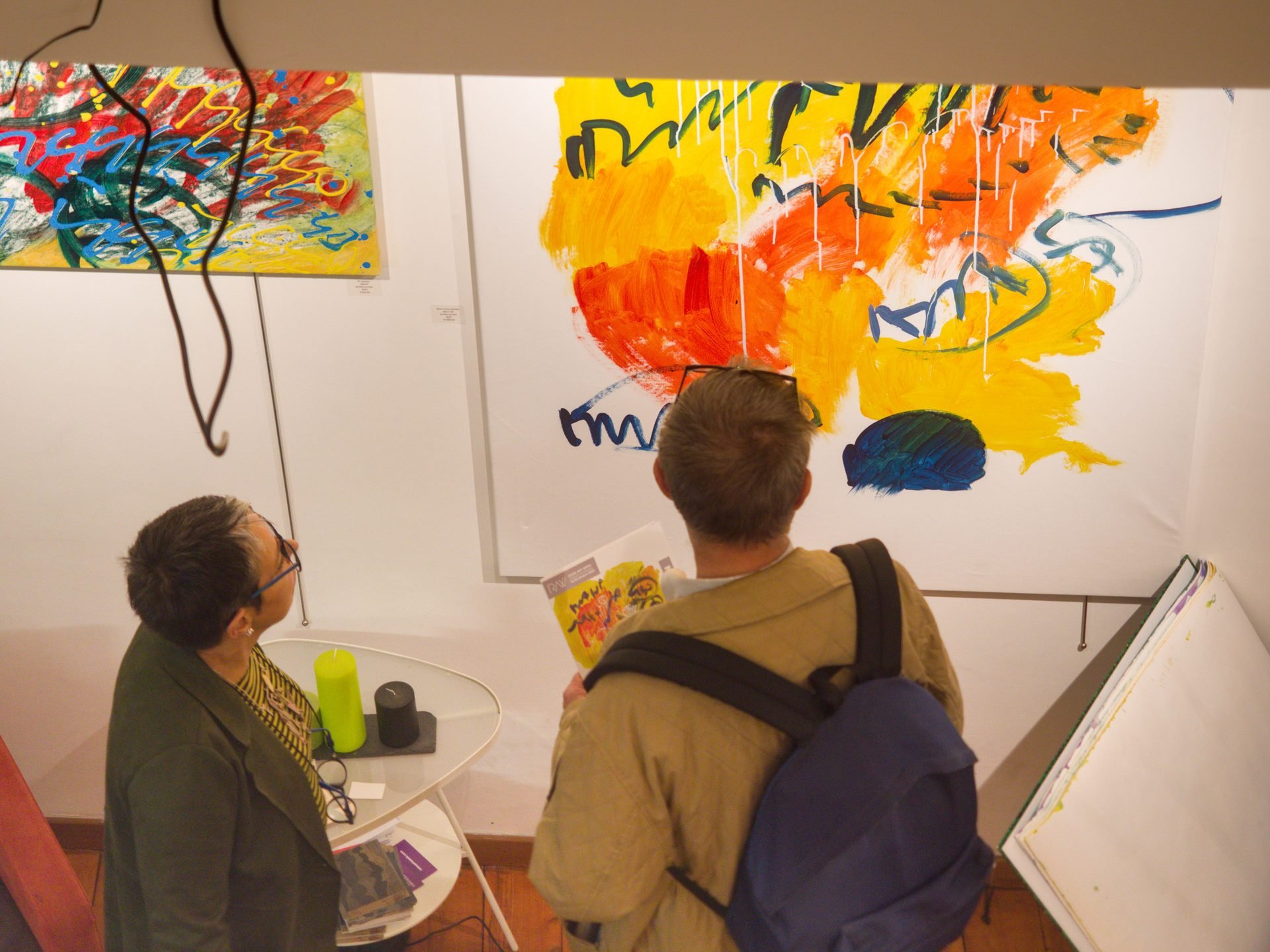
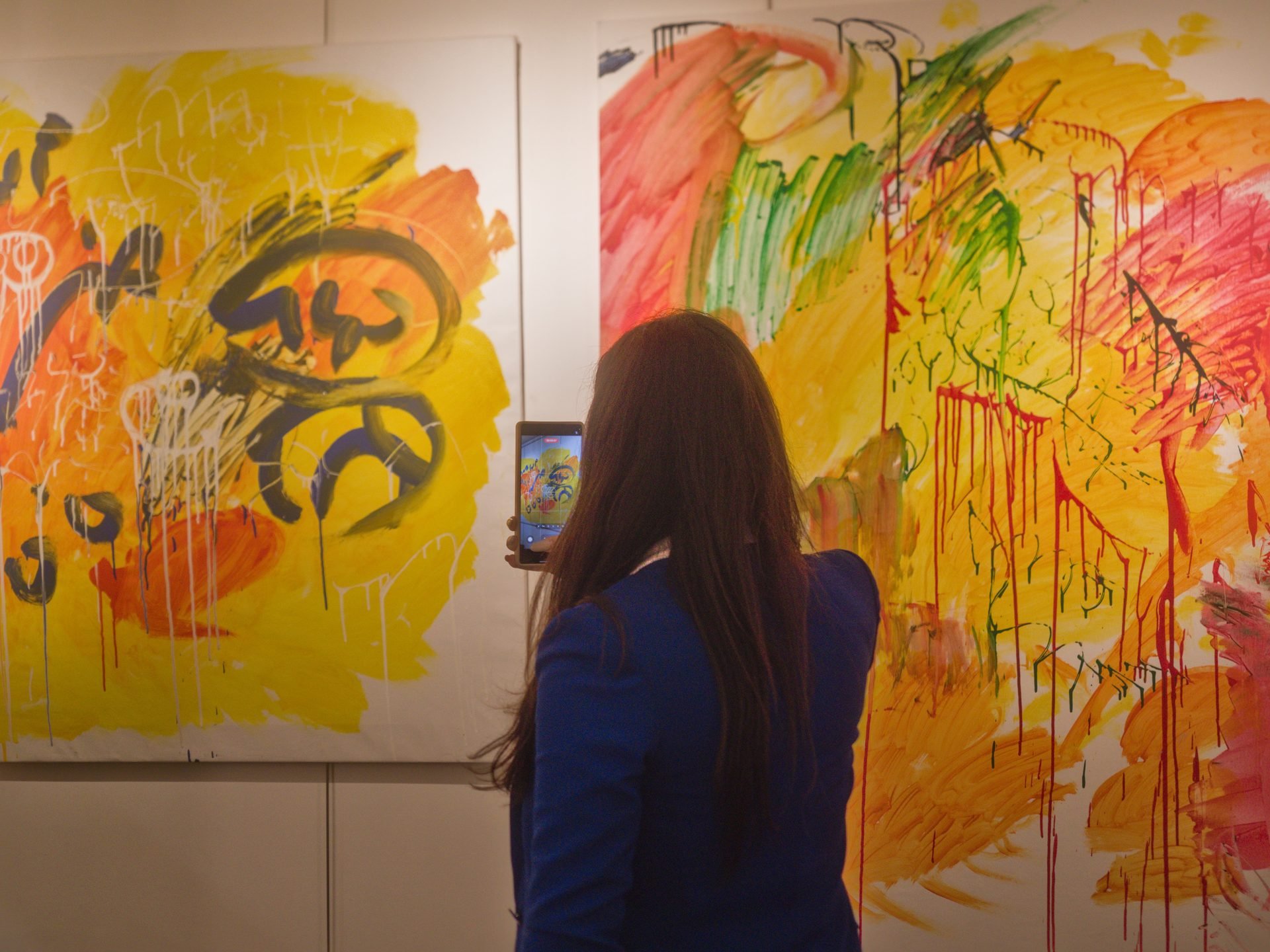
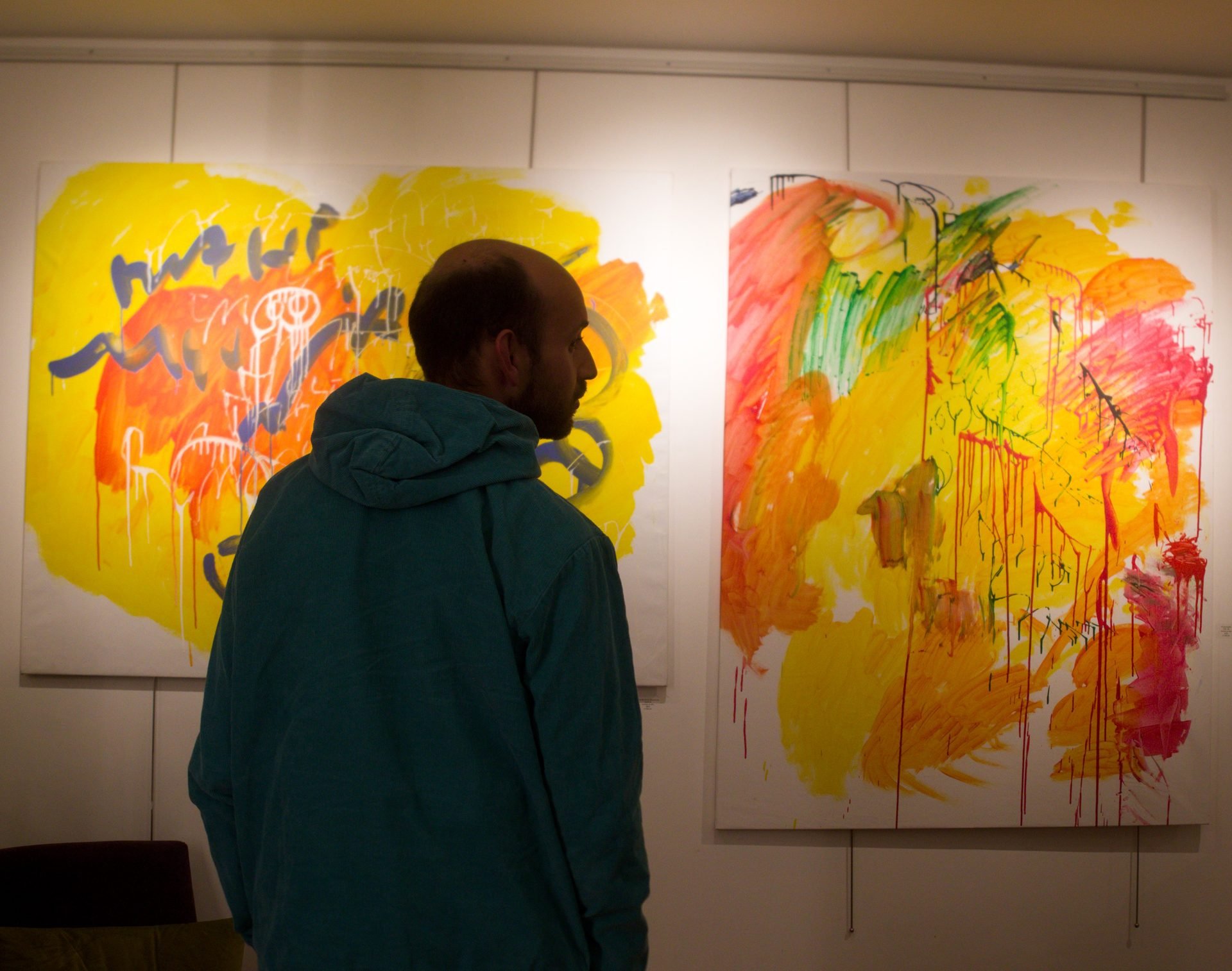
Tommaso works with the urgency of someone who feels most himself with a brush in hand, surrounded by colours, canvases and sheets of paper. His art is a daily journal of living, a way of telling us who he is and how he feels. In his works, colour is never merely an aesthetic choice: it becomes an emotional language capable of telling stories of people, places, memories and states of mind. Water also plays a fundamental role in his creative process, allowing colour to expand, settle and continue transforming over time, making each work open to unpredictability.
Yet Tommaso is also capable, contrary to what many people still assume about autistic individuals, of greeting you and asking: “How are you?”
That simple “How are you?” struck me deeply. It is not a question that others ask him, but rather the question Tommaso asks us. This seemingly ordinary phrase overturns many assumptions we have about autism and neurodivergence, challenging the stereotype of people who are entirely withdrawn into themselves. Certainly, that experience exists, but it is not the whole story.
His creative process also follows a precise structure. Each work begins with the choice of format, support and background colour. Then his name appears, gradually losing its role as a signature and becoming an image in itself. Letters turn into rhythm and mark-making, eventually forming a visual texture of their own. Among the recurring elements in his work is the number five, a memory of the years he spent at the Stagio Stagi Art High School in Pietrasanta, where every board was identified by name, surname and class number. What seems like a simple school gesture continues to resurface in his painting as a trace of his personal history.
This aspect also helps dispel another common misconception. The spontaneity of Tommaso's gesture may suggest that his work emerges purely from instinct. In reality, it is the result of a long and rigorous journey. From his early experiences with art therapy during childhood, to his family's decision to move to Pietrasanta so that he could attend the Stagio Stagi Art High School, painting has represented a space for growth, research and education. Even today, he continues to attend courses at the Academy of Fine Arts in order to deepen and refine his artistic practice. Behind the immediacy of his expression lie study, perseverance and the conscious construction of his own visual language.
So the question becomes: how do we respond when faced with the joy, colour and vitality of an artist whom we may be tempted to regard as “different”? How capable are we of evaluating his work for what it truly is, rather than through the lens of sentimentality or prejudice? It is all too easy to slip into clichés or to label him simply as an “autistic artist”.
Tommaso Panichi's production is extraordinarily prolific because it accompanies every moment of his life. Selecting the works for this exhibition was the first “How are you?” I had to ask myself. What do my instincts, my eye and my mind tell me when faced with his work? Is my mind open enough to smile alongside him?
This is why I decided to turn that same question into the title of the exhibition. Neurodivergence and autism contain as many nuances as there are colours in the sky, and it is impossible to confine them within a predefined frame. Tommaso speaks to us, tells us his story and has no doubts about art as the primary vehicle of his expressive and human potential. He feels completely at ease with a brush in hand. He is not the problem. The real question concerns our own gaze: how willing are we to free ourselves from our mental patterns in order to truly see his work?
TOMMASO PANICHI. (Milan, 1997) lives and works in Versilia. Trained at the Stagio Stagi Institute of Art in Pietrasanta, he has been presenting his work in exhibitions and curatorial projects since 2021. His artistic practice stems from the reworking of personal experiences, places and memories, which are transformed into an abstract visual language of immediate expressive power. Through mark-making, colour and gesture, he creates a free and poetic imagery in which observation of reality and emotional experience come together in an original synthesis.
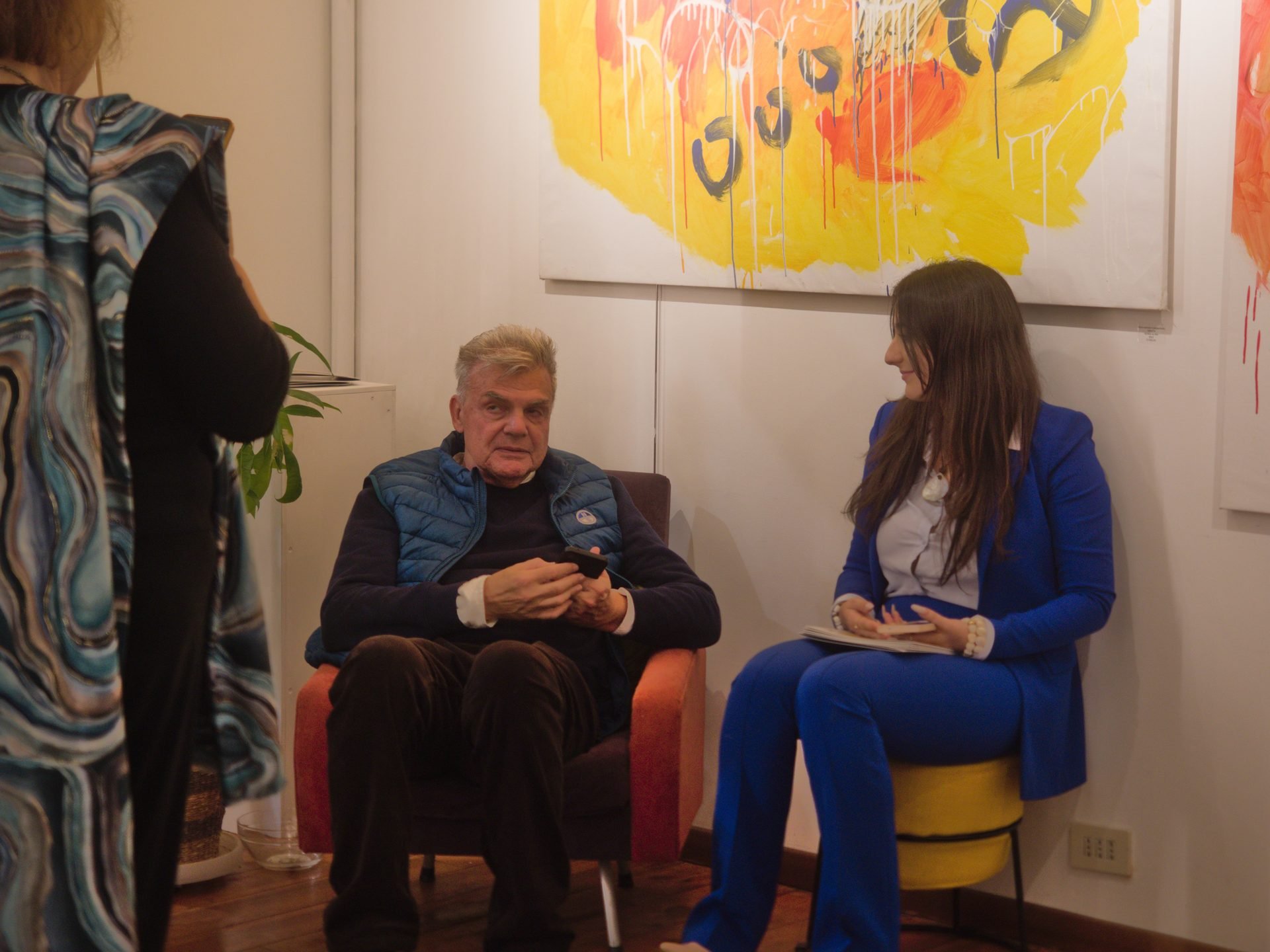
From Wednesday 21 October to Saturday 7 November, curated by Penelope Filacchione and Chiara Domenici.


Post
Story
Whatsapp