
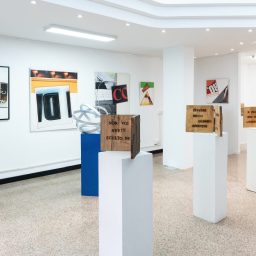
From 15 October to 15 November 2026, Associazione Culturale ALETIS presents By Night, Night and Day at Gallery Morphè in Rome, a two-person exhibition by Leonardo Crudi and Elia Novecento, founders of Collettivo 900.
Founded in Rome in 2016 by artists Leonardo Crudi and Elia Novecento together with art historian and curator Giovanni Argan, Collettivo 900 brings together artistic and curatorial practice in a research path spanning painting, poetry and interventions in public space.
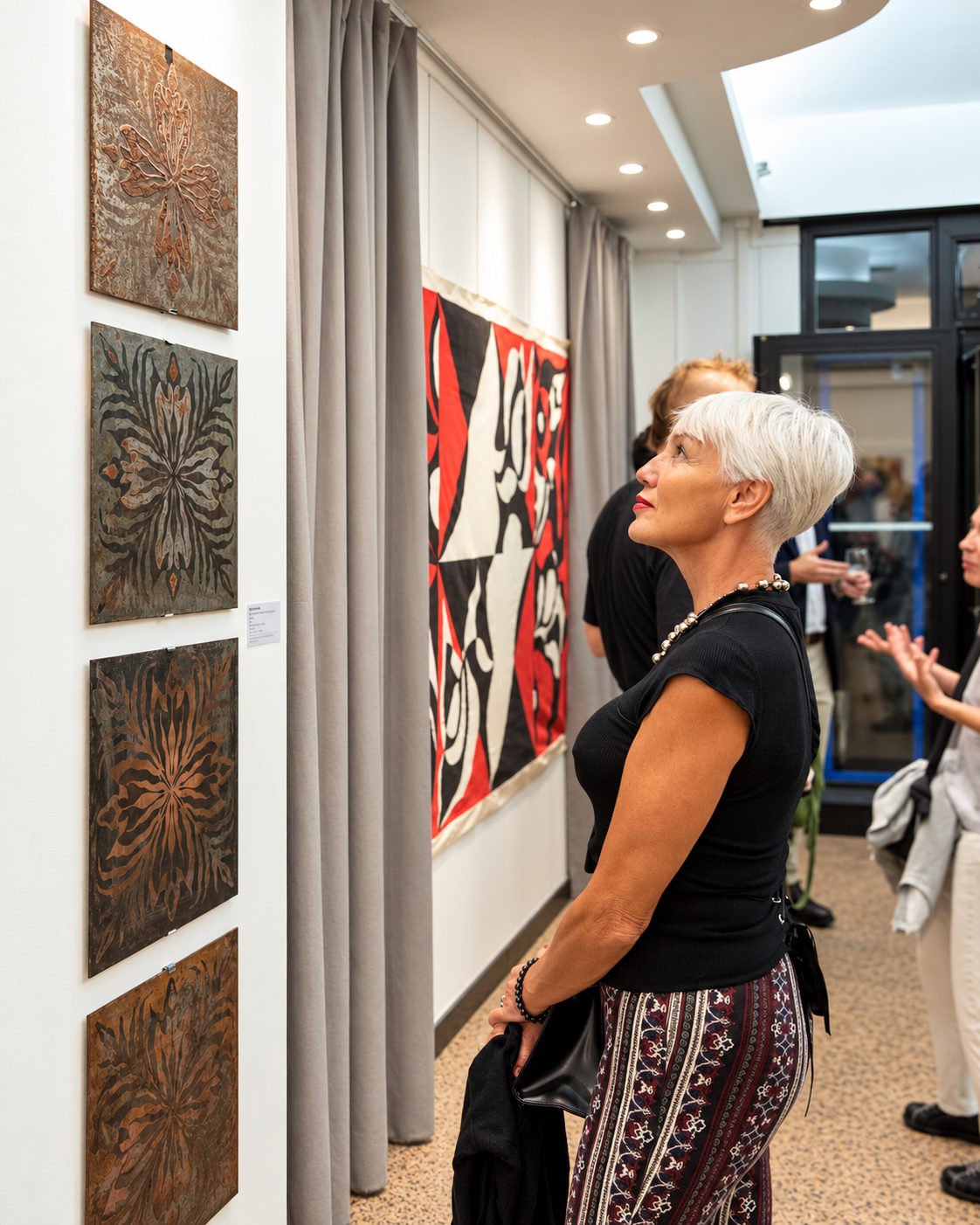
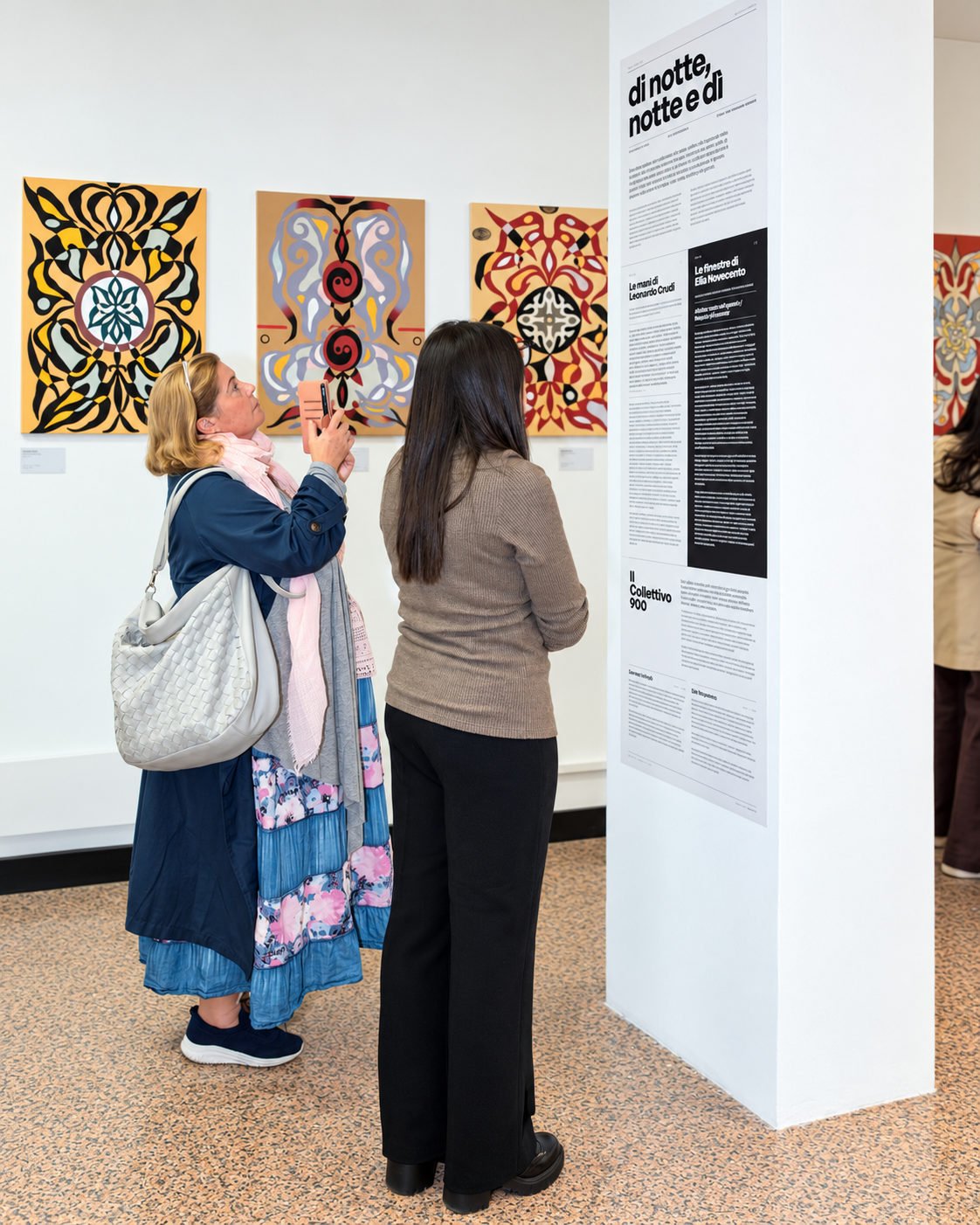
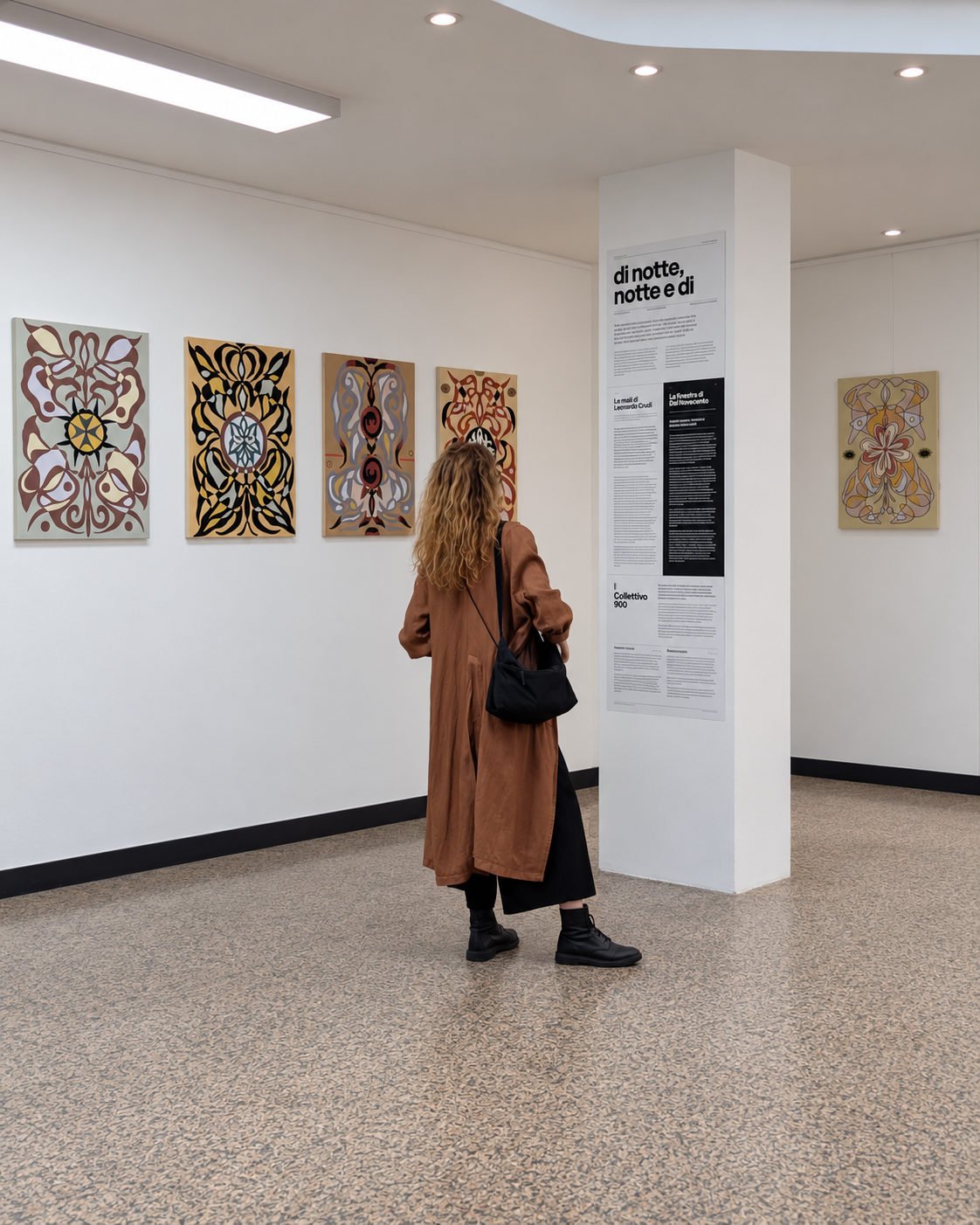
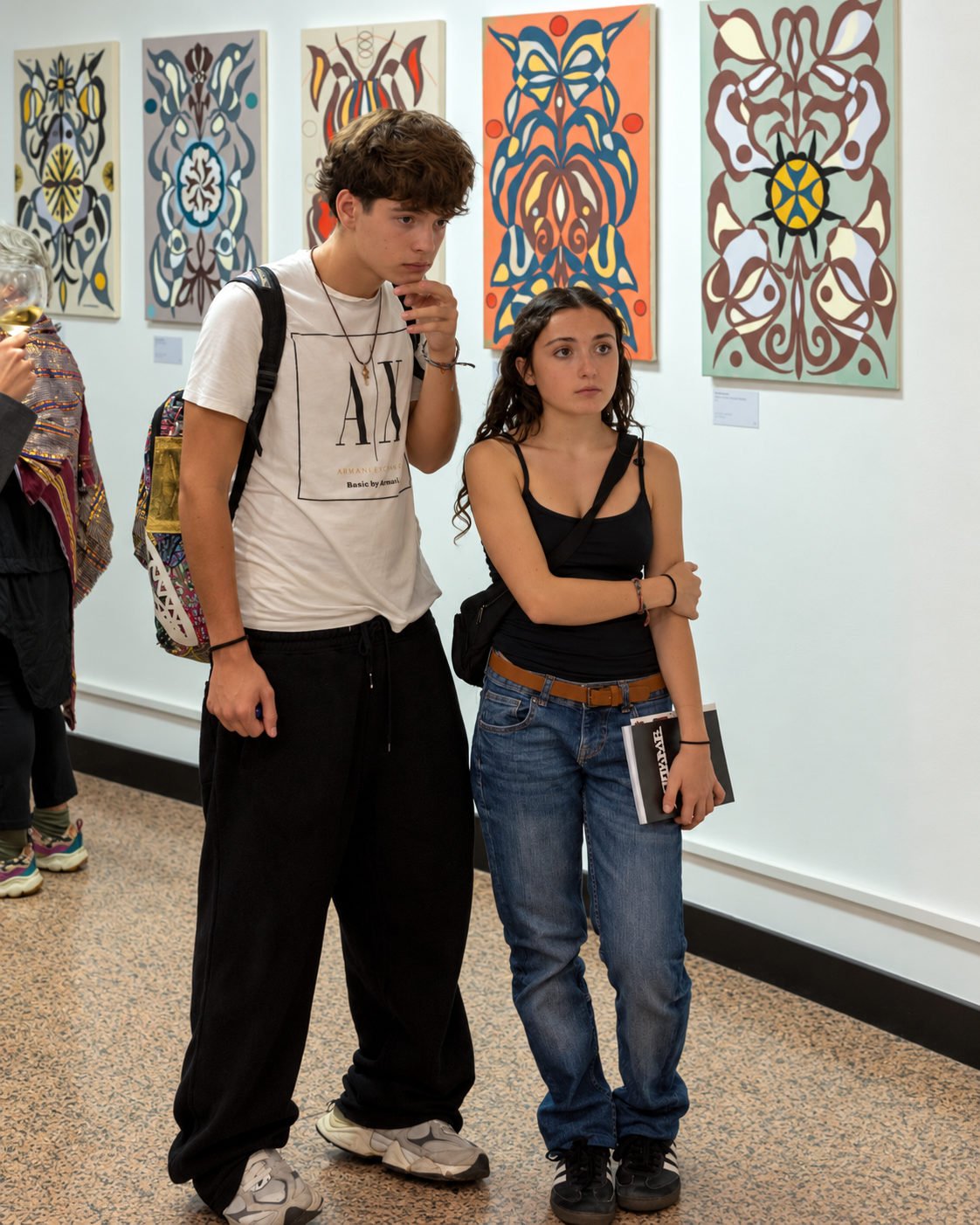
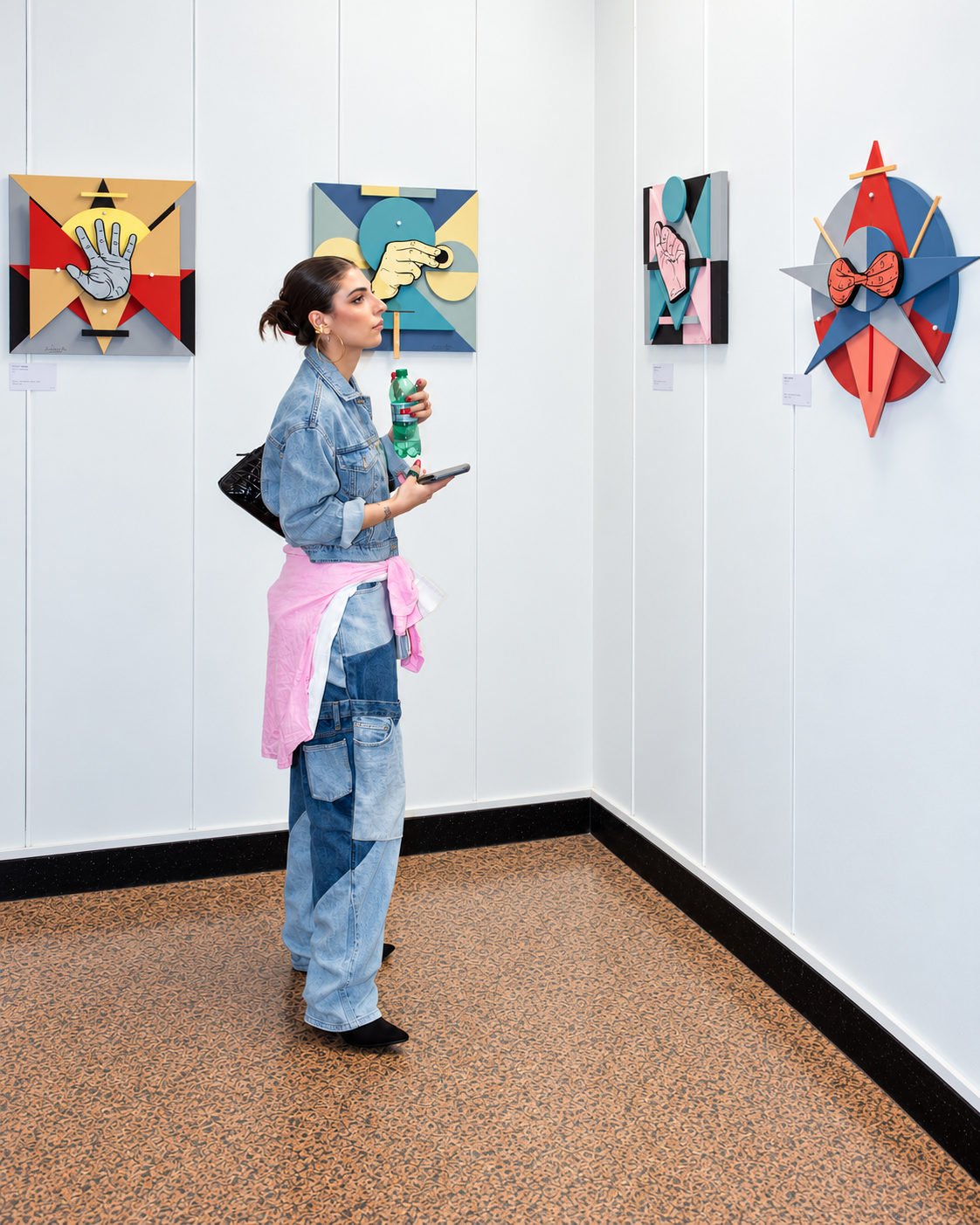
Sharing a background in writing, an interest in “minor” histories and cultures, and a passion for poetry, the two artists have developed parallel practices. Elia Novecento works with biomorphic abstraction, combining echoes of Rorschach inkblots and post-graffiti with decorative motifs drawn from Asian carpets and batik textiles. Leonardo Crudi combines graphic realism and geometric abstraction, drawing on Constructivism, Futurism, Roman Pop Art, and the imagery of Italian underground cinema and poetry.
Alongside their individual practices, the artists share an urban practice of “cultural agitation propaganda”: through hand-painted posters affixed to the walls of Rome, Collettivo 900 invites viewers to rediscover forgotten figures and engage with visual languages that reinterpret the legacy of the avant-gardes together with influences from Asian decorative traditions.
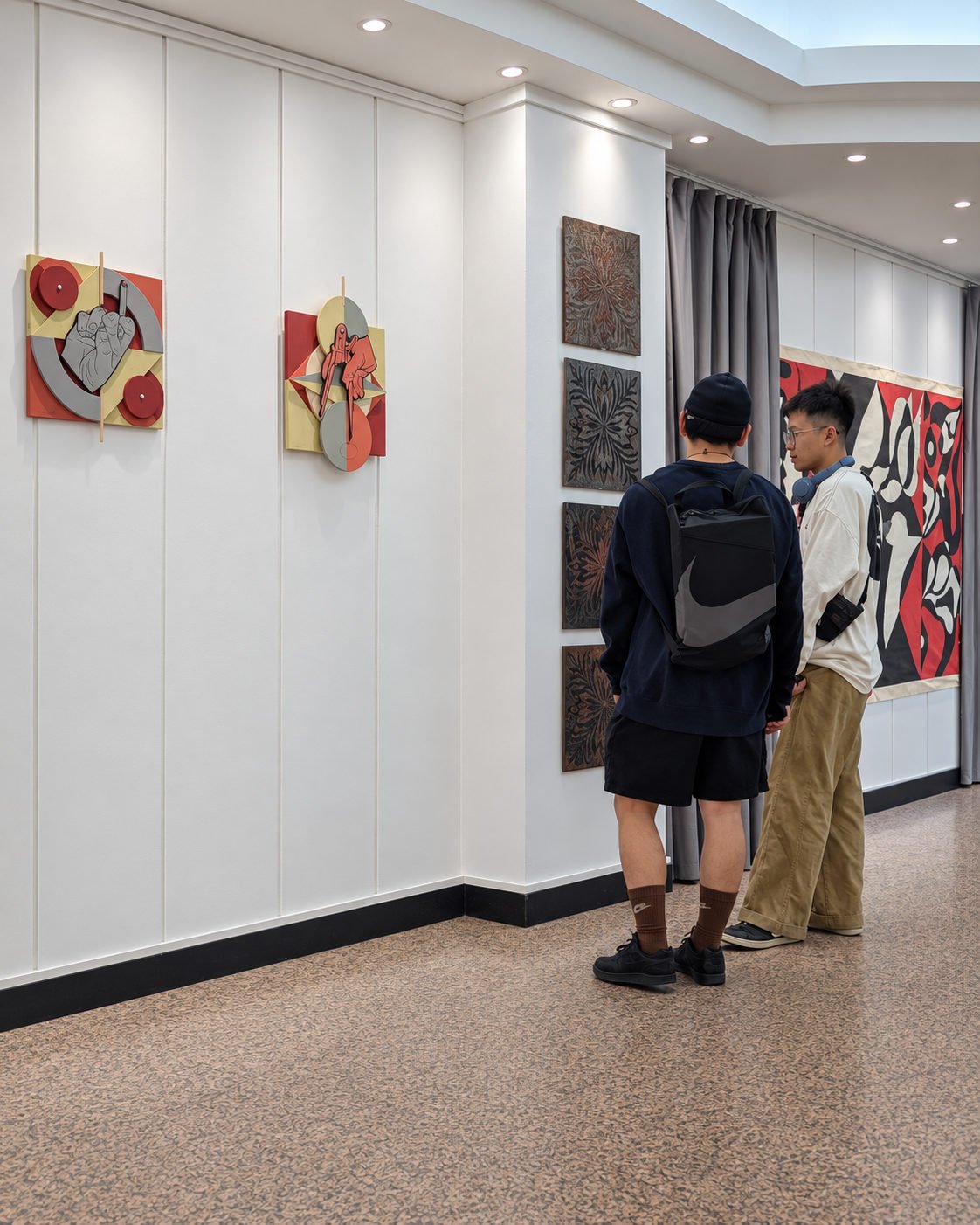
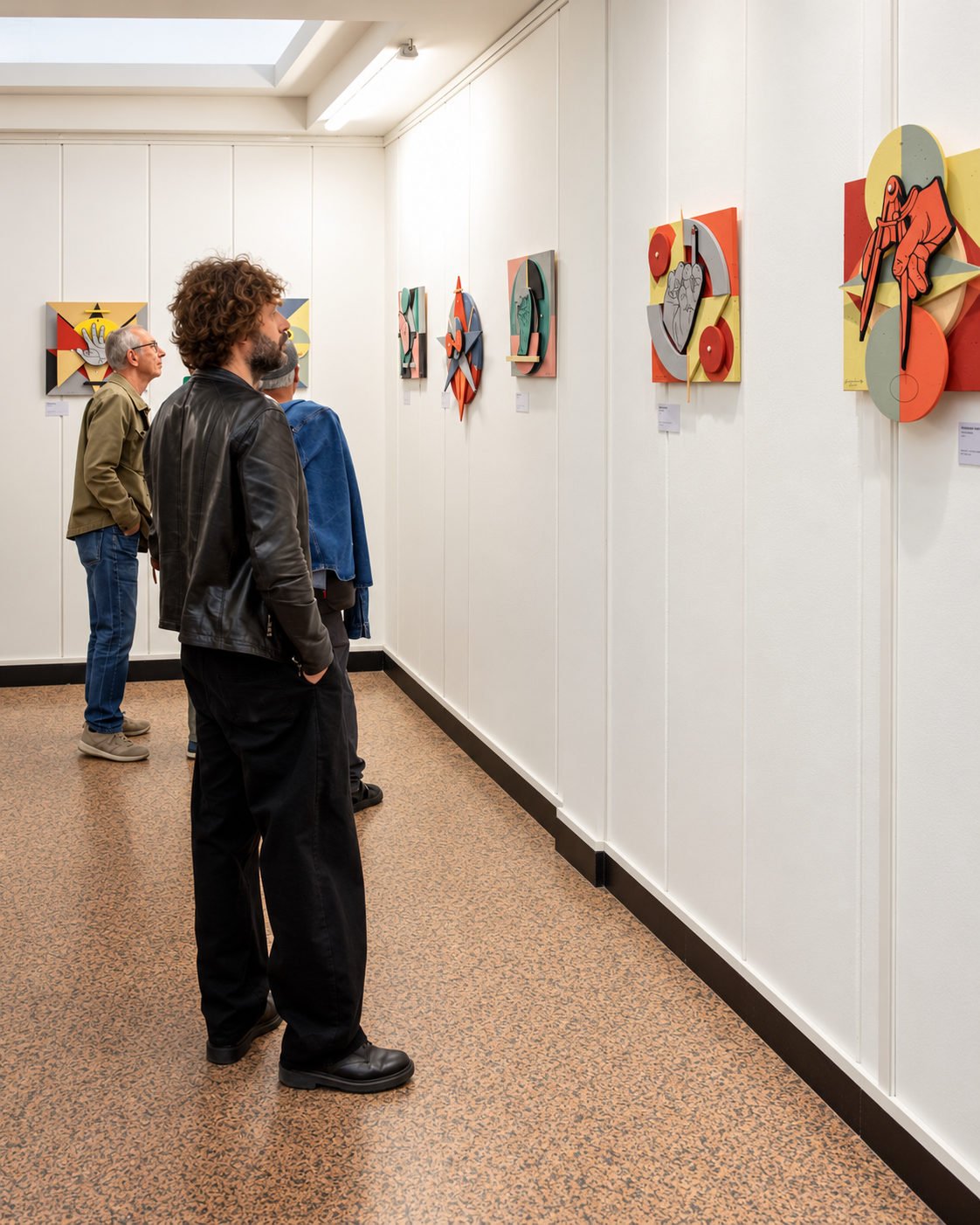
For this exhibition, Leonardo Crudi and Elia Novecento present a body of new works, developed from a shared reflection on everyday life by day and by night. What if the passage of time were nothing more than the repetition of apparently insignificant gestures and forgotten dreams? In By Night, Night and Day, Leonardo Crudi gives form to the daytime dimension through hands, protagonists of small, almost invisible gestures that punctuate our daily lives. Elia Novecento explores its nocturnal counterpart, where lived experiences lose their contours and re-emerge as abstract forms, expressions of dreams and memories. Day and night thus appear as two inseparable moments within the same cycle: what we live becomes what we imagine; what we dream influences the way we experience reality.
The exhibition invites viewers to recognise themselves in this shared experience, drawing attention back to what habit has taught us to stop observing and remembering.
Post
Story
Whatsapp