The Monumental Cemetery of Verano has a long and well-documented history.
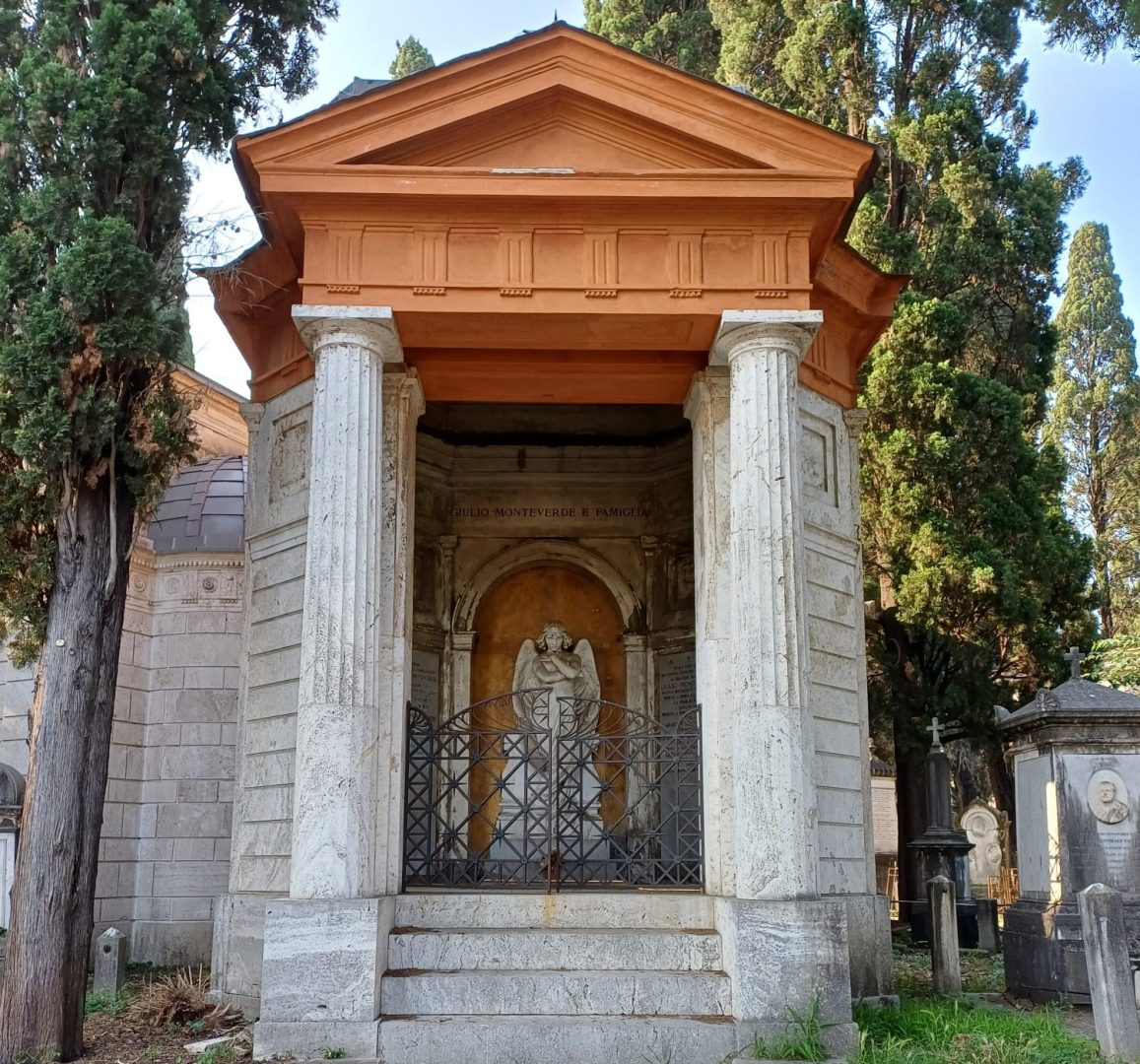
Archaeological evidence confirms that this cemetery was established on a site used for burials for at least twenty centuries, as demonstrated by the presence of a Roman necropolis known as the Catacombs of Saint Cyriaca. The name Verano derives from the ancient estate of the Verani family, a senatorial gens during the Roman Republic. Located along the ancient Via Tiburtina, the cemetery was founded during the Napoleonic occupation (1805–1814), following the Edict of Saint-Cloud (1804), which required burials to take place outside city walls. The project was entrusted to Giuseppe Valadier between 1807 and 1812. After its consecration in 1835, construction continued under Popes Gregory XVI and Pius IX, directed by Virginio Vespignani. The cemetery was further expanded after the establishment of the Kingdom of Italy, incorporating important estates such as Villa Mancini, where the hill now known as the Pincetto is located.
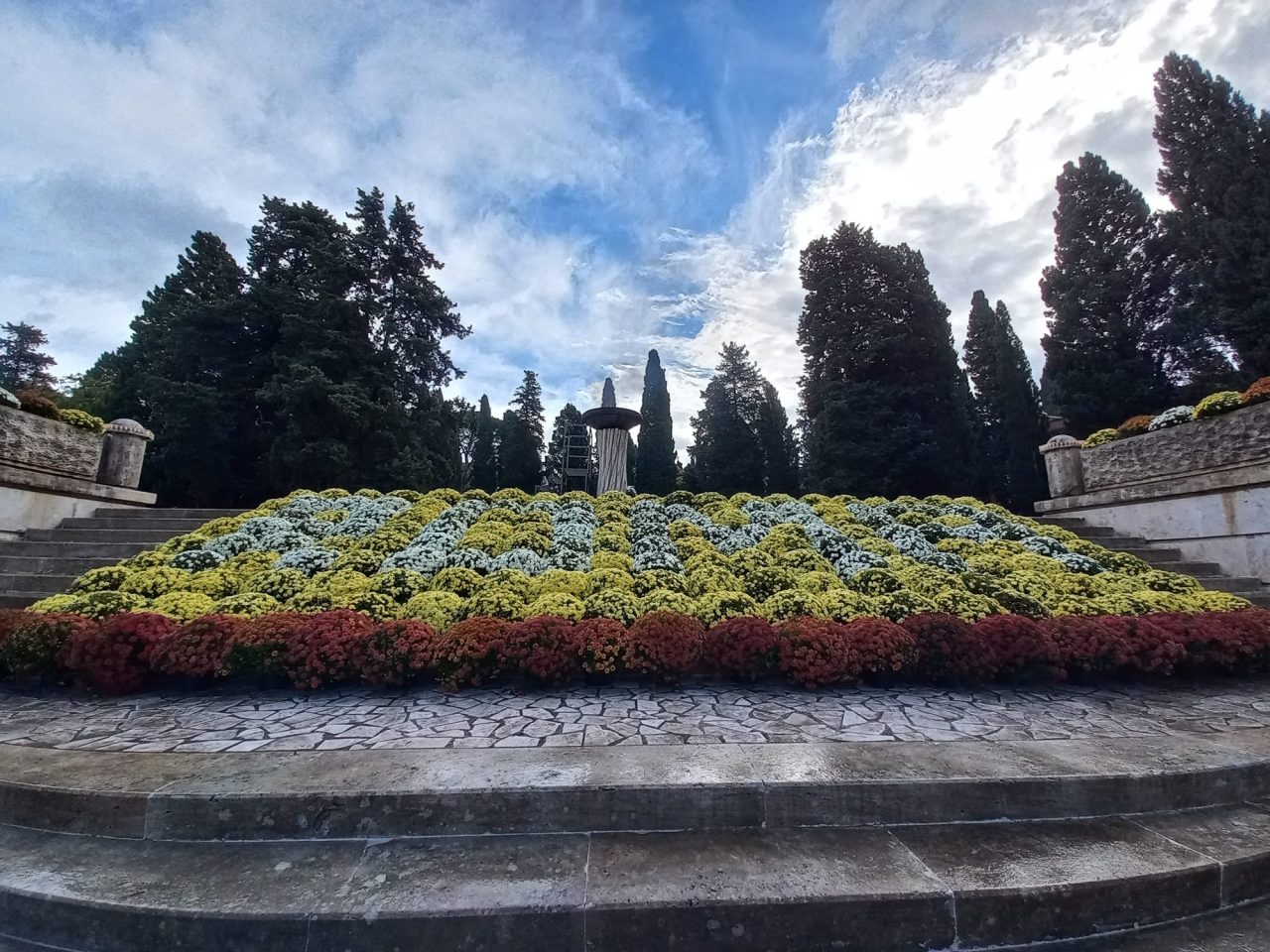
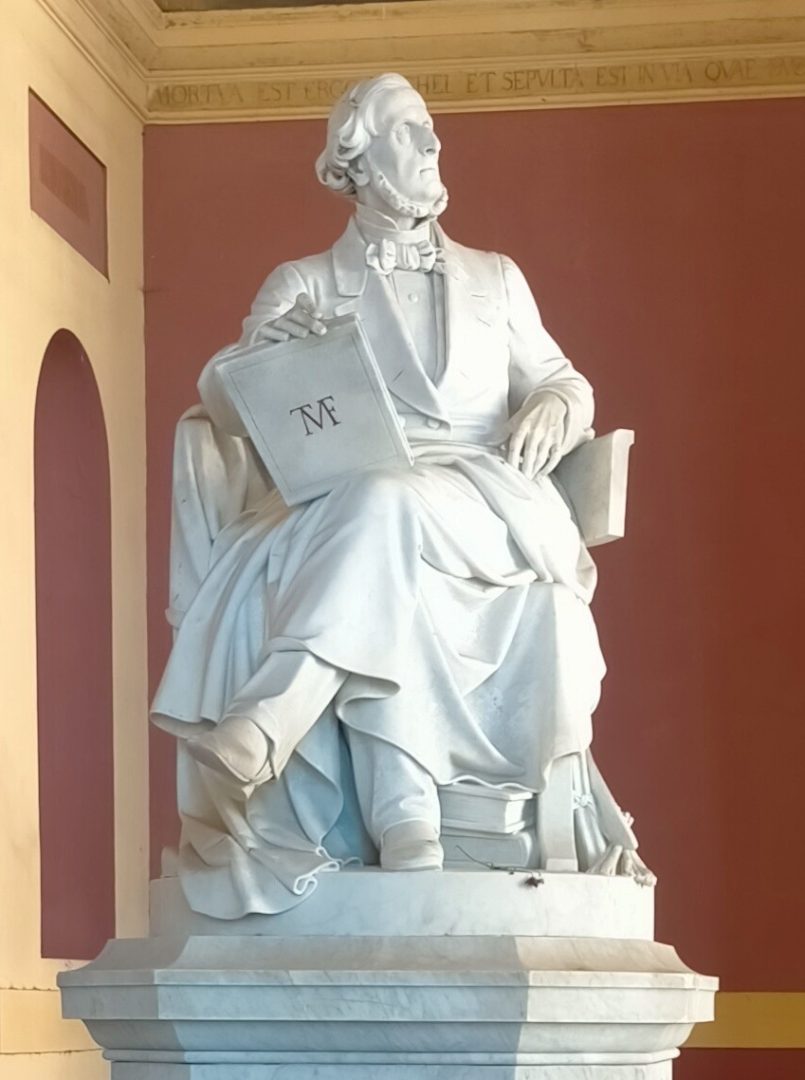
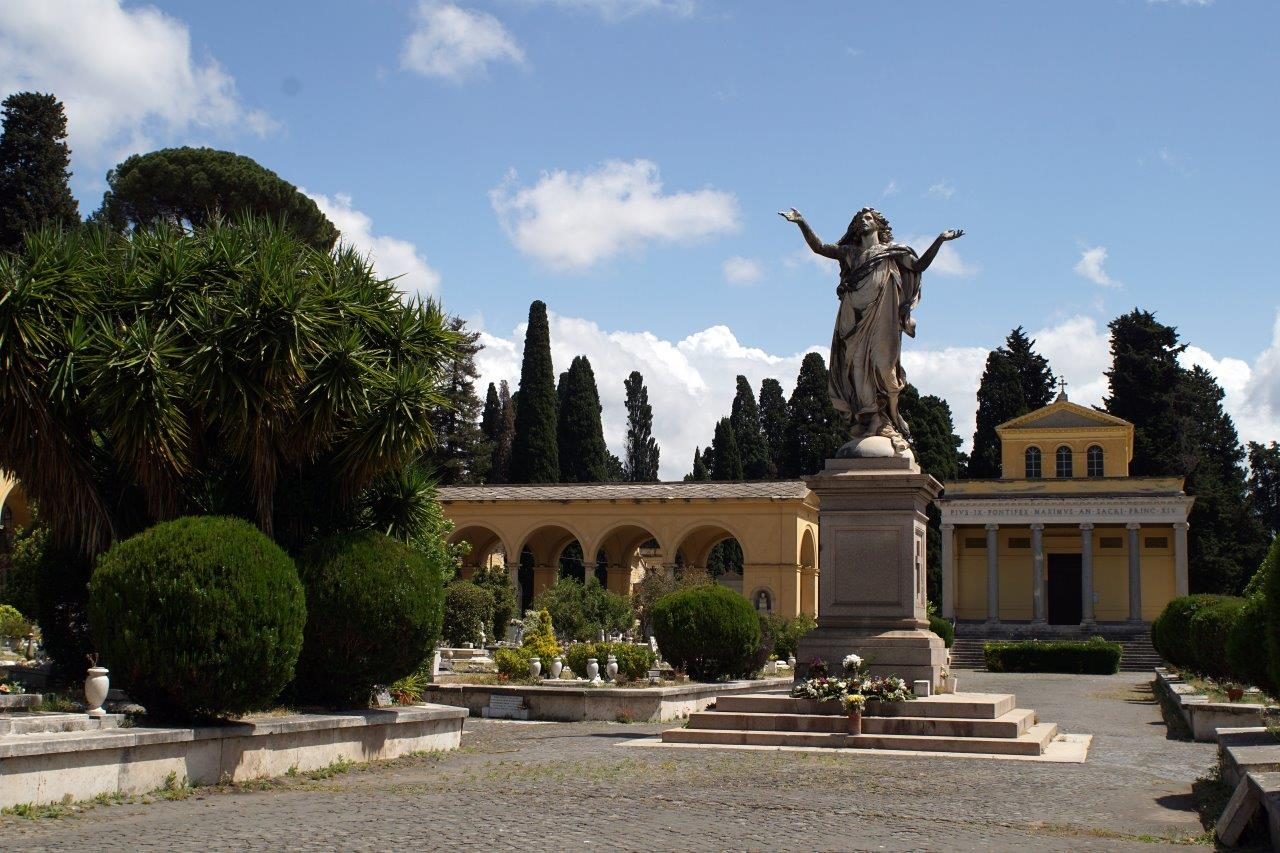
Considered the second largest cemetery in Italy, covering approximately 83 hectares, Verano preserves an extraordinary collection of historical, artistic, architectural, and environmental heritage. Its monumental three-arched entrance is distinguished by four marble statues representing Meditation, Hope, Charity, and Silence. Beyond the entrance avenue lies the Quadriportico, at the center of which stands the statue Christ Ascending to Heaven by sculptor Leopoldo Ansiglioni (Turin, 1832 – Rome, 1894). The Quadriportico, the heart of the oldest monumental section, is a large rectangular courtyard divided into four areas and surrounded by an extensive portico featuring cross-vaulted bays supported by Doric travertine columns, inspired by Classical and Early Christian Renaissance architecture. The arcades house remarkable funerary monuments enriched with sculptures and decorative elements, including the lunettes painted in the academic style of the late nineteenth century under the influence of Virginio Vespignani, professor and president of the Accademia di San Luca.
Another remarkable landmark is the Egyptian Temple, designed by Salvatore Rosa in 1883 as Rome’s first crematorium. Among those cremated here was the writer and playwright Luigi Pirandello, who died in 1936. Following structural problems and a period of abandonment, the building was repurposed in 1995 as a hall for secular farewell ceremonies. Its most recent restoration, completed in 2025, further enhanced its role as Rome’s best-known public venue for non-religious memorial services.
The cemetery is the final resting place of many distinguished figures who have honored Rome and Italy through their lives and achievements, including Marcello Mastroianni, Roberto Rossellini, Bud Spencer, Ennio Morricone, Fabio Mauri, Monica Vitti, Grazia Deledda, and many others.
Verano is a true open-air museum. Especially during spring and autumn, AMA Cimiteri Capitolini organizes a variety of free guided tours that allow visitors to discover its artistic and historical treasures.
The Monumental Cemetery of Rome is also a vast public park rich in history and nature, ideal for independent exploration. Visitors can follow one of the eleven themed itineraries available on the website www.cimitericapitolini.it or through the ARTour app.
Participant not active in this edition

Participants are solely responsible for managing their own content and for obtaining the necessary permissions for the publication of any materials.
If you are the owner of this profile and do not wish to appear on Rome Art Directory, please contact info@romeartdirectory.com to request its removal.

Post
Story
Whatsapp