
In the performance “LUMAS”, artists Lorena Ercolani, Caterina Felicioni, and Patrizia Ciabatta use acting and dance to guide the audience along a route connecting two spaces. This creates an expressive link between the performers' bodies and the artworks accompanying the journey, shaping an experiential performance that invites the audience to intuitively follow the performers as they move from one location to another.
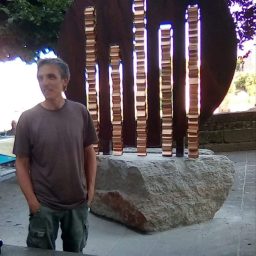
Throughout the various stages of Alfonso Maria Isonzo’s artistic journey, particular attention has been paid to three key natural phenomena—light, sound, and movement—with a special focus on the use of materials that serve this exploration. Light is investigated primarily through its reflections, reverberations, and the resulting shadows. Sound is created not as melody, but through vibrations, frequencies, or by activating forms that generate sound. Movement is almost always explored through works such as "quadrisculptures" or sheets of harmonic bronze, crafted so that—when activated—they come to life in various ways. Matter is utilized through a wide range of materials—including metals and concrete, as well as natural or recycled elements—often creating juxtapositions or contrasts, such as the fusion of concrete and foam rubber or the incorporation of reclaimed materials into concrete. Inevitably, the exploration of these elements has led to the creation of works that interact with the viewer or with one another.
Post
Story
Whatsapp