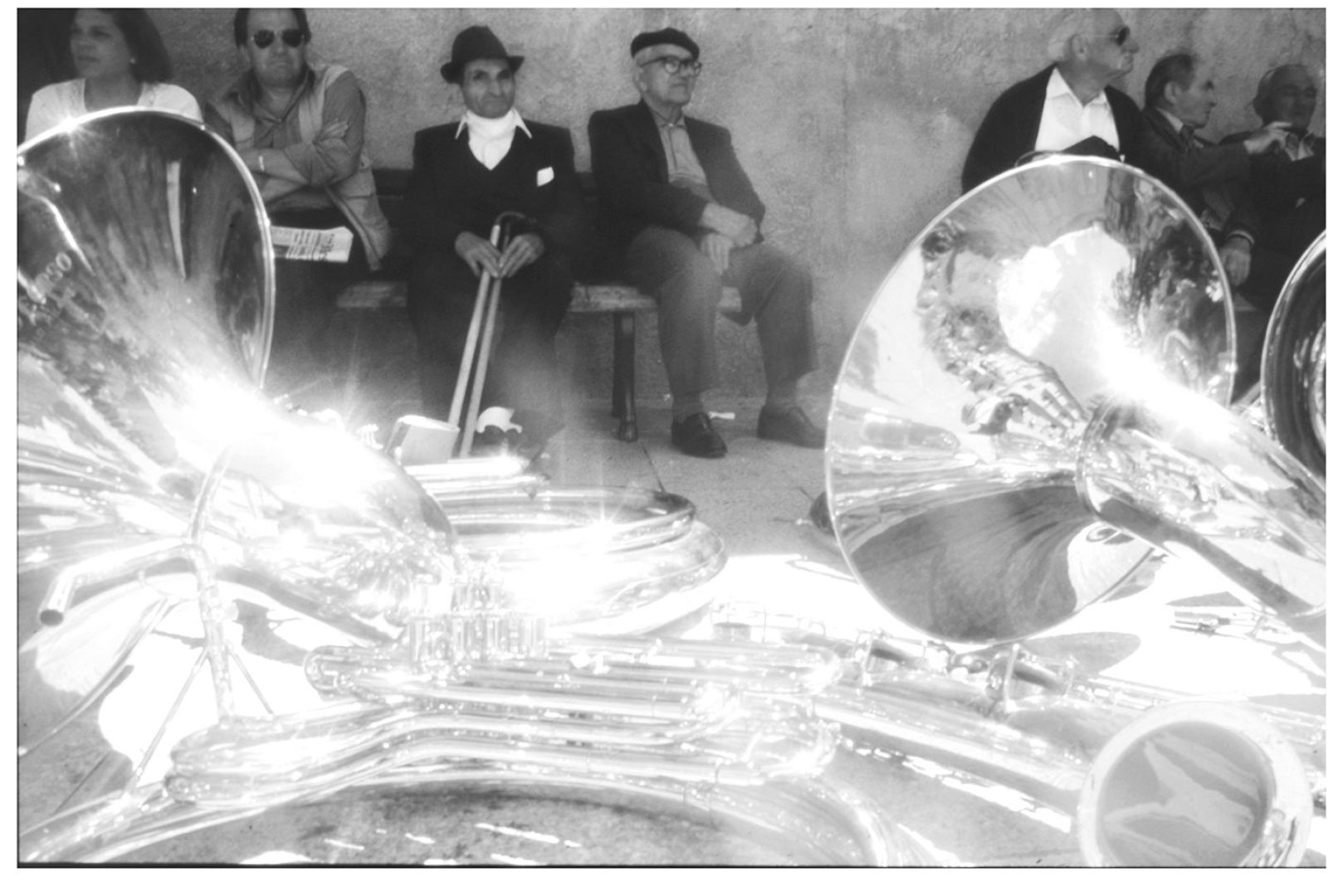
BUBBLES OF LIGHT
Photographs by Angela Maria Antuono
Text by Marisa De Quattro
Curated by Luisa Briganti
OCTOBER 17 – NOVEMBER 3, 2026
Opening reception: Saturday, October 17, at 6:30 p.m. – free admission
“Bubbles of Light” is the title of this exhibition, and at first glance, it seems almost too delicate to encompass everything it contains, because a bubble, as we know, is the most fragile thing that exists—born from a breath and dying in a breath— yet it is precisely in this fragility that its nature as light lies, for nothing is more like light than a bubble; both exist only in the instant that someone looks at them, and this is perhaps the first gentle deception Angela Maria Antuono offers to those who enter the gallery—leading us to believe she is speaking of an optical phenomenon, a film defect, or a reflection of the sun inside the lens of an old camera, when in reality she is speaking of how we live, how we endure, and how we maintain our balance within something that could burst at any moment.
It begins with a walk along the walls, and the first thing you come across is a real bubble—a sphere of light floating above a street while a newlywed couple dances beneath a concrete overpass, he wearing a hat and she in a white dress billowing in the wind, and you can’t help but wonder if that light is blessing them or if it simply happened to be there by chance, indifferent—just as beautiful things often are, found by chance by someone just when they needed them most.
Then the tone shifts, and we enter another bubble—that of work and toil—a woman with a headscarf tying together tobacco leaves hung out to dry, her face marked by a weariness that no light can soften, and here the photograph ceases for a moment to be lighthearted and becomes a testimony, as if Angela had wanted to remind us that not all bubbles are made of the same air—that there are joyful ones, and there are those in which one remains trapped, suffocating, for an entire lifetime without choosing to be.
A little further on, the newlyweds reappear, still beneath the same bridge, still in the same white light that seems reluctant to give way to full daylight, and beside them, out of focus, a photographer in a hat watches them set the scene, and in that image—within this one—lies the common thread of the exhibition: real life and staged life touching without ever fully merging, like two bubbles that brush against each other yet remain two separate entities.
Then comes the angel—a girl with fabric wings standing before a tree with intertwined branches, her face still, almost indifferent to her own beauty—and immediately after, the bellows camera that someone is holding with aged hands to capture her, and the contrast between the suspended modernity of that figure and the archaic nature of the camera photographing her is perhaps the most honest key to Antuono’s entire body of work, as he does not seek the new for the sake of the new but seeks light wherever it may be hidden, even within a lens from eighty years ago.
Next comes winter, a snowman with a sullen face in front of a stone ruin, and then Carnival, two figures swathed in white cloth walking down a village street like good-natured ghosts, and then again a naked body with a painted mask in place of the face, his hands forming binoculars around his false eyes—an image as unsettling as it is alluring, because it reveals that beneath every bubble of lightheartedness there is always a more uncomfortable question waiting to be asked.
And then there are the lives on the sidelines: a mother and son reduced almost to shadows on the page by the overly bright light; two women walking across a meadow carrying a white chair, just as one carries a memory one doesn’t want to leave behind; an old woman sitting on a bench in the shade while the town passes her by without stopping—and in each of these images, the bubble is no longer a visible phenomenon but an invisible condition, the way a person can be inside the world and yet remain slightly outside of it.
Toward the end, the processions return—priests silhouetted against the light under a portico, women in white lace shawls lined up as if time had stopped a century ago—and then the sea, a wicker basket left where the wave breaks, pigeons on a white staircase, a woman’s figure on the sand with her face obscured by the backlight, and finally a solitary palm tree facing a stormy sea—the last image and the last bubble, the largest of them all, the one we’re all inside without knowing it, which is time itself.
Anyone who knows Angela Maria Antuono knows that this exhibition isn’t just an archive of photographs taken over the years—with different textures and different lighting—but a way for her to keep doing what she’s always done, even when she speaks, when she tells stories, when she listens. Because those of us who, like me, have seen her walking through town with her camera always around her neck, like an extra limb she herself had decided to grow, knows that this was not a habit but a state of being—a bubble of authentic art within which she continued to live even when everything around her seemed like a voiceless non-place, a town that did not ask to be looked at and that she looked at all the same, stubbornly, as if the contrast between the place’s poverty of imagination and the richness of her eye were precisely the spark from which all inspiration had to spring, and perhaps that is why her photographs never stray from where they were taken but remain there, rooted in that seemingly silent land, proving that no place is truly without light if someone persists in seeking it. A way of leaving things slightly out of focus because it is there, in that blurred edge, that the truth of a life reveals itself better than it would in full definition, and that is why, when you leave an exhibition like this, you don’t take away an answer but something more like that bubble of light seen at the beginning—still intact, still capable of bursting at any moment.
The exhibition is part of the program for the Art Schools' White Night, organized by CO.R.S.A

Post
Story
Whatsapp